
By Katerina Raptaki*
The maritime industry is currently obsessed with the “New era”: a high-tech horizon with autonomous vessels, decarbonization and digital transformation.
We spend all our time talking about autonomous ships, cutting carbon emissions and going fully digital to “future-proof” our fleets.
There is, however, one major problem: we’ve forgotten to update the most important - our people. Our technology is racing into the future, but the way we lead and manage our crews and vessels is still stuck in the past.
Here’s a recent example: look into the 2025 CISO 50 Powerlist, with the most influential cybersecurity executives in Greece: These 52 leaders are the digital shields of our modern infrastructure, but the data reveals a stark disconnect: of those 52 power players, only 2 women!
Of course, I am so proud that both of us - my amazing colleague Theofano and myself - hail from the shipping sector, but the math is impossible to ignore.
In an industry that prides itself on being “forward-leaning”, why does the leadership landscape still look like a vintage photograph?
We are no longer in the era where society expects women to stay at home, raise children and cook. We all agree those days have passed; we have successfully reached the “next level” of social evolution.
But here’s the real catch: we’ve started letting people in the front door, but the path to the top is still blocked. The tech departments and the executive offices are still acting like a private club, and they’ve kept the doors bolted shut.
The departmental ghetto
The global corporate world loves women, provided they stay in their designated lanes. We see brilliant women running Legal departments, Marketing or HR. We are the “soft power” that keeps the gears grinding.
But if we move toward the Technical department, the IT / servers’ room or the vessel’s engine room, there the air gets thinner. It is as if the industry has decided that women are “safe” to handle the people and the paperwork, but the “harsh” world of STEM remains a restricted zone.
The ghost of the 7%
Actually, this is a global problem that begins in the classroom. When I studied Naval Engineering at the National Technical University of Athens (NTUA), there were only 7 women in a class of 50. In the Mechanical Engineering department next door, it was even worse: just 4 women out of 200 students.
Was the math harder for us? Did the laws of Marine Hydrodynamics change based on gender? Of course not! The restriction is a cultural software installed long before a student ever picks up a compass.
It starts with a family-produced social script. Even in the most progressive households, parents begin a quiet campaign of soft discouragement. We are told that STEM is “rough”, that construction sites or shipyards are “difficult” and that technical environments are “harsh”. We are steered toward literature, languages or social sciences, not because of aptitude, but because they are perceived as “safe”.
The “safety” vs. “excellence” paradox
Here is the great irony: We claim we want our children to excel, but we prioritize a specific, gendered version of safety for our daughters.
We protect our girls from “risk”, forgetting that leadership and excellence are 100% about risk. By discouraging a young woman from entering a “harsh” engineering environment, we aren’t protecting her; we are disarming her. We are making sure she doesn’t get “tough” enough to handle the stress and pressure of the international business world.
Who defines what is “risky” anyway? Risk is subjective. It’s a function of IQ, experience, education and the refusal to be intimidated.
To a woman who has mastered the complexities of a vessel’s digital architecture, a “harsh environment” isn’t a loud workshop - it’s a boardroom where she has to justify her existence to people who still think “the Cloud” is just something that causes rain.
The multitasking engine
Furthermore, the very “harshness” we are supposedly being protected from is exactly where the female brain excels. It is a biological and neurological reality that a woman’s brain is made for multitasking. We are built to handle many streams of information at once and stay calm when things get chaotic.
On top of this, women are naturally designed to balance social demands, raise children, manage a home, support a partner, care for the elderly and still perform at the highest level in their careers.
In a modern “multi-factor” crisis - where a ship is facing a simultaneous cyber-attack, a mechanical failure and a geopolitical navigation challenge - this ability to synthesize complex information under pressure is not just an advantage; it is the ideal profile for a leader.
Imagine two candidates applying for the same demanding managerial role in Maritime IT.
Candidate A: Engineering degree, 15 years in cybersecurity, male
Candidate B: Engineering degree, 15 years in cybersecurity, female.
Who gets chosen?
Often, the quiet assumption is that Candidate A feels like the “safer” choice - he seems to fit the existing culture. And just like that, the same pattern repeats itself. We choose the man because that’s what has usually been done, and then wonder why so few women appear on leadership lists. We claim we want them to excel, but we’re actually pushing them to stay “safe” by OUR standards – and, of course, we’re putting a ceiling on their potential.
A message for Posidonia 2026
To the shipowners, CEOs, and industry titans: our industry is in an “extreme raise”.
We are building the most sophisticated floating computers in human history. We are worried about hackers in the Red Sea and GPS spoofing in the Strait of Hormuz.
Can we really defend those assets with only half the available talent?
If we are only looking for technical leaders among men, we are operating with one eye closed. To stop modern threats, we need the holistic risk assessment and the resilience that women have been forced to develop just to survive in this industry.
Beyond the “Women’s panel”
I don’t want another “Women in Shipping” tea party. I don’t want to be told I’m “Inspiring” for surviving the engineering school or making it onto a Powerlist.
Then we have the associations, such as Women in Shipping (WISTA) and Women4Cyber. Well, while they have great intentions, there is a hidden sting to them. They do vital work in networking, but their very existence is a constant reminder that the gender gap is still a massive chasm.
When we have to create separate “schemes” and special clubs just to get women into the room, we are essentially validating that the main room is still a “men’s club”. These groups are important bridges, but they shouldn’t even exist!
The goal shouldn’t be to have a flourishing “women’s branch” of shipping; it should be to reach a point where these associations are no longer necessary because gender in shipping is as irrelevant as eye color. Until “Women in Shipping” is just “People in Shipping”, we haven’t truly arrived.
I want to see parents stop asking their daughters if a job is “safe” and start asking if it’s “ambitious”.
I want to see technical and IT departments that don’t look like monasteries.
We still have a mountain of work to reach the point where the “Blue economy” is actually a meritocracy for anyone with the brains and the backbone to navigate it.
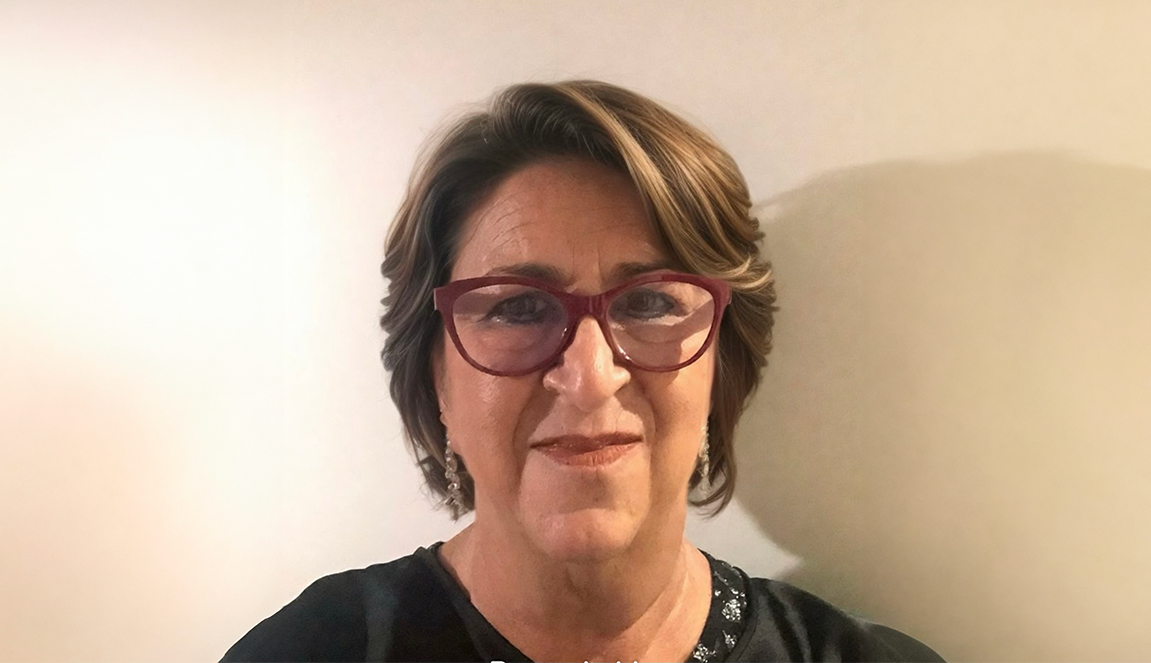
* Katerina Raptaki is a recognized leader in maritime technology with 38 years of IT experience and a degree in Naval Architecture from the National Technical University of Athens (NTUA). Throughout her career, she has held key managerial positions, leading major projects in digital transformation, cybersecurity and data management. She has been instrumental in shaping the industry’s approach to cybersecurity and digital innovation, with deep expertise in large-scale digital systems and the technology that powers the modern maritime world. A founding member and former President of AMMITEC, she remains an active and influential voice, driving progress across the maritime technology community.