




Wall Street, inflation, geopolitical initiatives and shipping: When uncertainty passes the baton to reality.
We are now just two weeks away from the U.S. midterm elections on November 3, at a time when financial markets are being called upon to assess a particularly complex economic and geopolitical environment. The recent correction on Wall Street, concerns over inflation and interest rates, as well as increasing diplomatic activity surrounding Ukraine and Iran, are creating an environment of heightened uncertainty. However, as we have discussed in previous articles, we believe that current developments should be examined within a broader economic and political context.
Our fundamental assessment remains that the U.S. economy could be approaching a new cycle of growth, provided that the geopolitical initiatives and economic strategies currently taking shape begin to deliver tangible results. The week ending October 16 was marked by significant divergences in the performance of U.S. stock market indices, with the greatest pressure concentrated in the technology sector, particularly among semiconductor companies. The high valuations of certain companies and concerns about the financing costs associated with investments in artificial intelligence influenced investor behavior. Nevertheless, the total market capitalization of the U.S. stock market, which is approaching $68.7 trillion, is of particular interest.
This figure, combined with the picture of a pronounced correction that has emerged recently, creates what we consider to be a noteworthy paradox. We estimate that the recent correction may have more of the characteristics of an artificially driven reallocation of investment positions than reflect any substantial deterioration in the long-term prospects of the U.S. economy. This is because we believe that so-called “smart money” is not simply monitoring day-to-day volatility but is already seeking investment opportunities that could deliver significant returns once today's uncertainty passes the baton to the reality of economic and geopolitical developments.
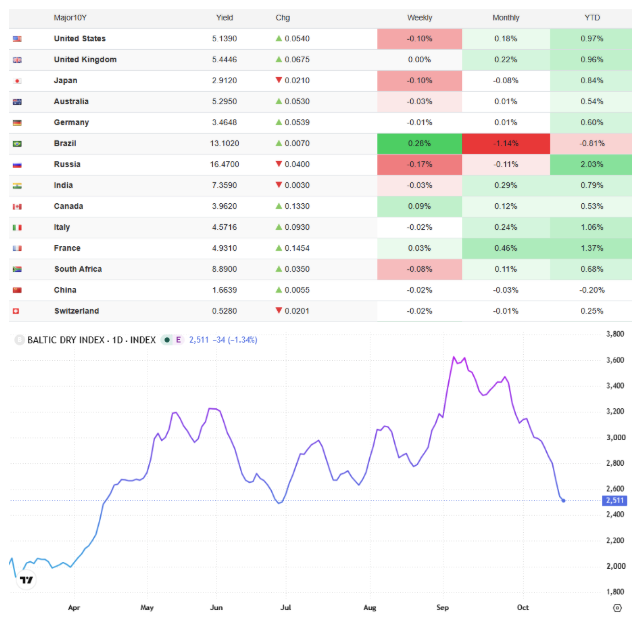
In our assessment, this is precisely where the essence of the current stock market environment lies: not necessarily in what markets fear today, but in what they may begin to price tomorrow. The latest U.S. inflation figures, with September's annual Consumer Price Index standing at 3.7%, keep monetary policy at the forefront. At the same time, pressures on producer prices reinforce the need for a careful assessment of the costs faced by businesses. We continue to attach particular importance to the direction of U.S. Treasury yields, as they directly affect the cost of capital and stock market valuations.
The Federal Reserve's upcoming meeting on October 27-28, particularly important at this juncture, will provide another significant reference point for investor expectations. The week of October 19-23 is also expected to be particularly important, as Wall Street's attention shifts toward third-quarter corporate earnings. On Tuesday, earnings announcements are expected from GE Aerospace, General Motors and Netflix, among others, while on Wednesday attention will focus on results from Tesla, Meta Platforms and IBM. These companies can provide important indications regarding investment in artificial intelligence, the direction of industrial activity and the resilience of consumer demand. Particularly within the technology sector, we will be watching the extent to which substantial capital expenditures translate into actual revenue growth and profitability, a factor we consider decisive for the market's future direction.
At the same time, earnings from industrial and transportation companies will provide a broader picture of the real economy, beyond the daily volatility of stock market indices. On the economic calendar, weekly initial jobless claims are expected on Thursday, while Friday will bring the preliminary manufacturing and services PMI readings, along with the University of Michigan's consumer sentiment data. These announcements will help us assess whether the U.S. economy is maintaining its growth momentum and how inflation expectations are evolving. In our assessment, this week could provide the first meaningful indications of whether the recent stock market correction is creating new investment opportunities or requires a longer period of adjustment.
Of particular interest are reports that the U.S. side intends to send Jared Kushner and Steve Witkoff to Norway as part of renewed efforts to conduct peace negotiations concerning the war in Ukraine. This potential initiative is especially significant, as it is taking shape during a critical political period for the United States. As we have repeatedly emphasized, a substantive peace agreement could become a major economic catalyst, creating opportunities for new investment, stronger international trade and future reconstruction programs. For the time being, we are closely monitoring diplomatic activity without taking the achievement of an agreement for granted.
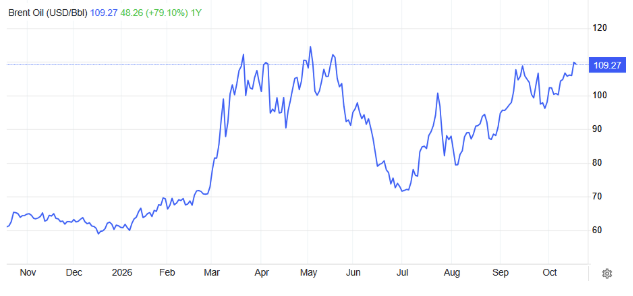
On October 19, another interesting development emerged, with Russian Foreign Minister Sergey Lavrov stating that Moscow is willing to contribute to efforts to find solutions to the conflict between Iran and the United States. This statement does not constitute an agreement, but it reinforces our interest in the possibility of broader geopolitical de-escalation. Substantive progress on both the Ukrainian and Iranian fronts could reduce the geopolitical risk premium in energy markets, creating the conditions for significantly lower oil and gasoil prices. Such a development would have a positive impact on production and transportation costs, inflation expectations and global economic activity. For the shipping industry, the potential strengthening of trade flows arising from a future period of reconstruction and increased industrial activity is also of particular interest. We maintain our assessment that, provided demand for dry bulk transportation strengthens substantially, the Baltic Dry Index could move considerably above the 3,000-point level. The actual outcome will, of course, depend on demand, trade routes and available vessel capacity.
All these developments take on particular significance because they are unfolding just two weeks before the U.S. midterm elections. In our assessment, the potential political cost is an important factor that could influence the timing of certain decisions and diplomatic initiatives. We do not rule out the possibility that, under different political circumstances, some of these developments might have gained greater momentum. At the same time, we believe that the U.S. administration is seeking to create conditions that support stronger economic activity through energy policy, investment, domestic production and the reshaping of international economic relations.
The implementation of this strategy, provided it is accompanied by growth in corporate profitability, could create conditions for significantly higher stock market valuations. We estimate that, following the Midterms, a period may begin in which markets increasingly price in the reality of decisions rather than the uncertainty of expectations.
That is when we will be able to determine the extent to which the strategies currently taking shape can translate into actual agreements, economic growth and new investment opportunities. Until then, we continue to maintain our positive medium- to long-term outlook for the U.S. economy and stock markets, while also assessing the risks that remain. And we, as we have done throughout all these years, will continue to monitor developments closely and adjust our investment decisions accordingly.
Because the success of an investment strategy is determined not only by how early it can identify a potential development, but above all by how effectively it can capitalize on that development once it begins to materialize.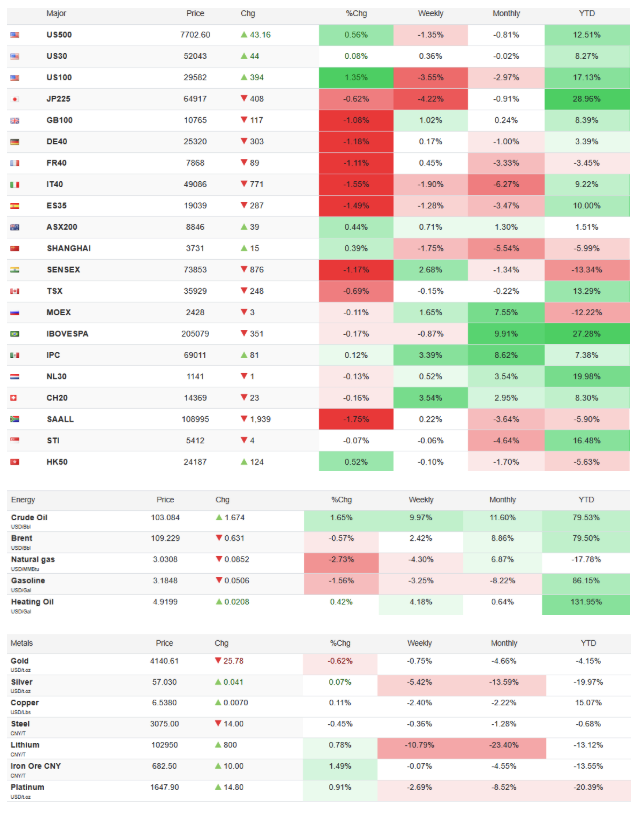
By George D. Kotsiakis
Founder - Private Wealth & Investment Strategist
GEKODESK & PARTNERS - Global Investment Services