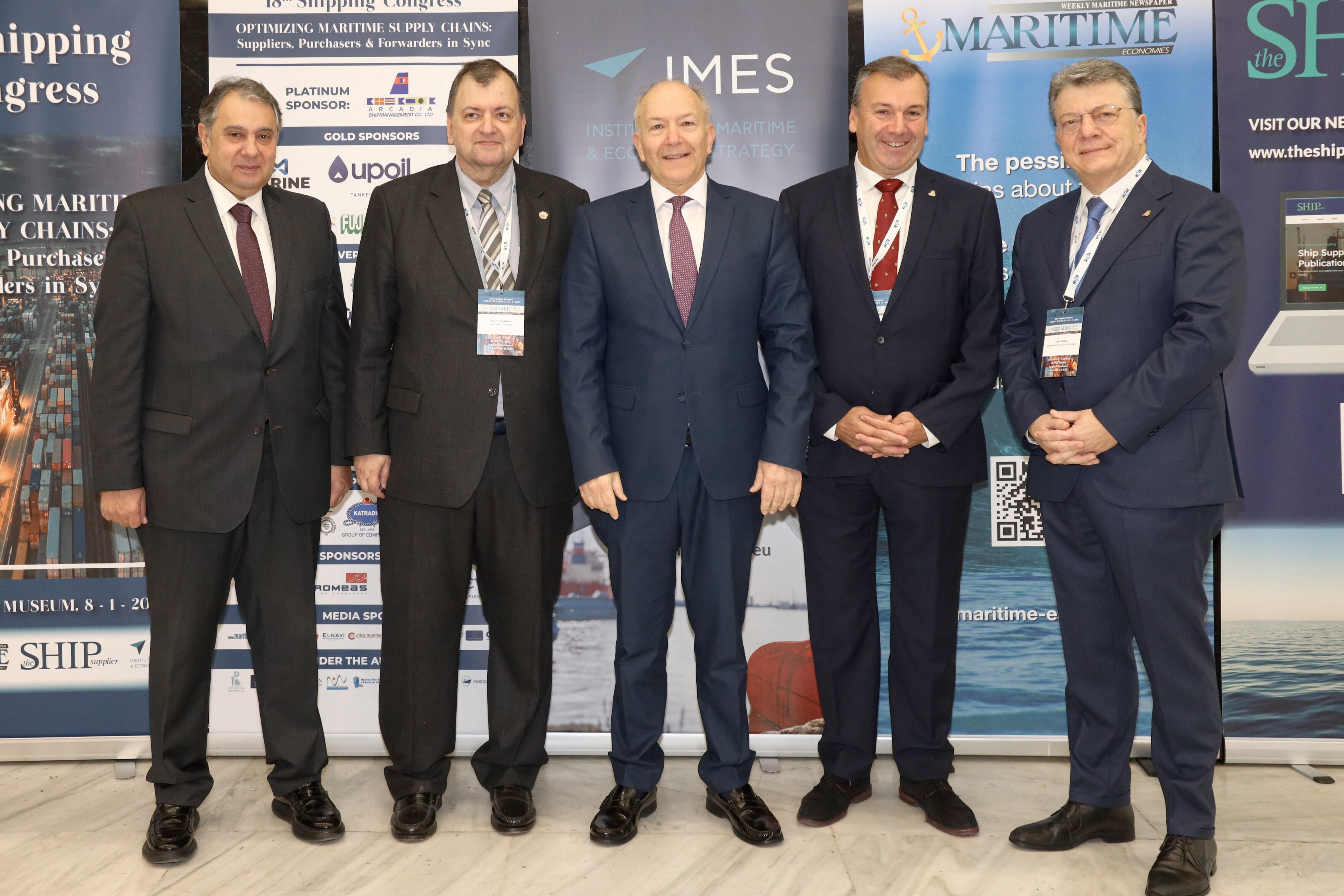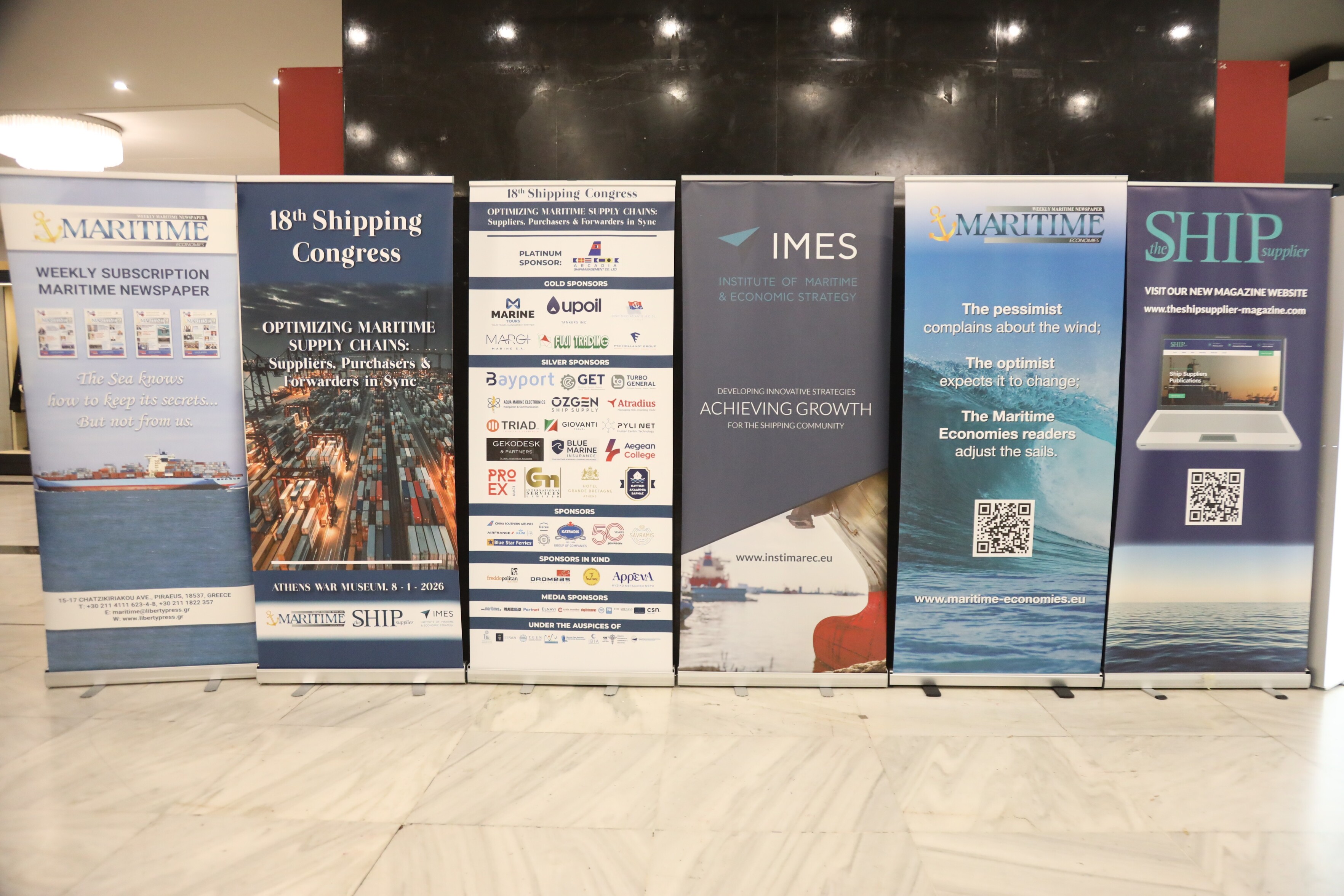
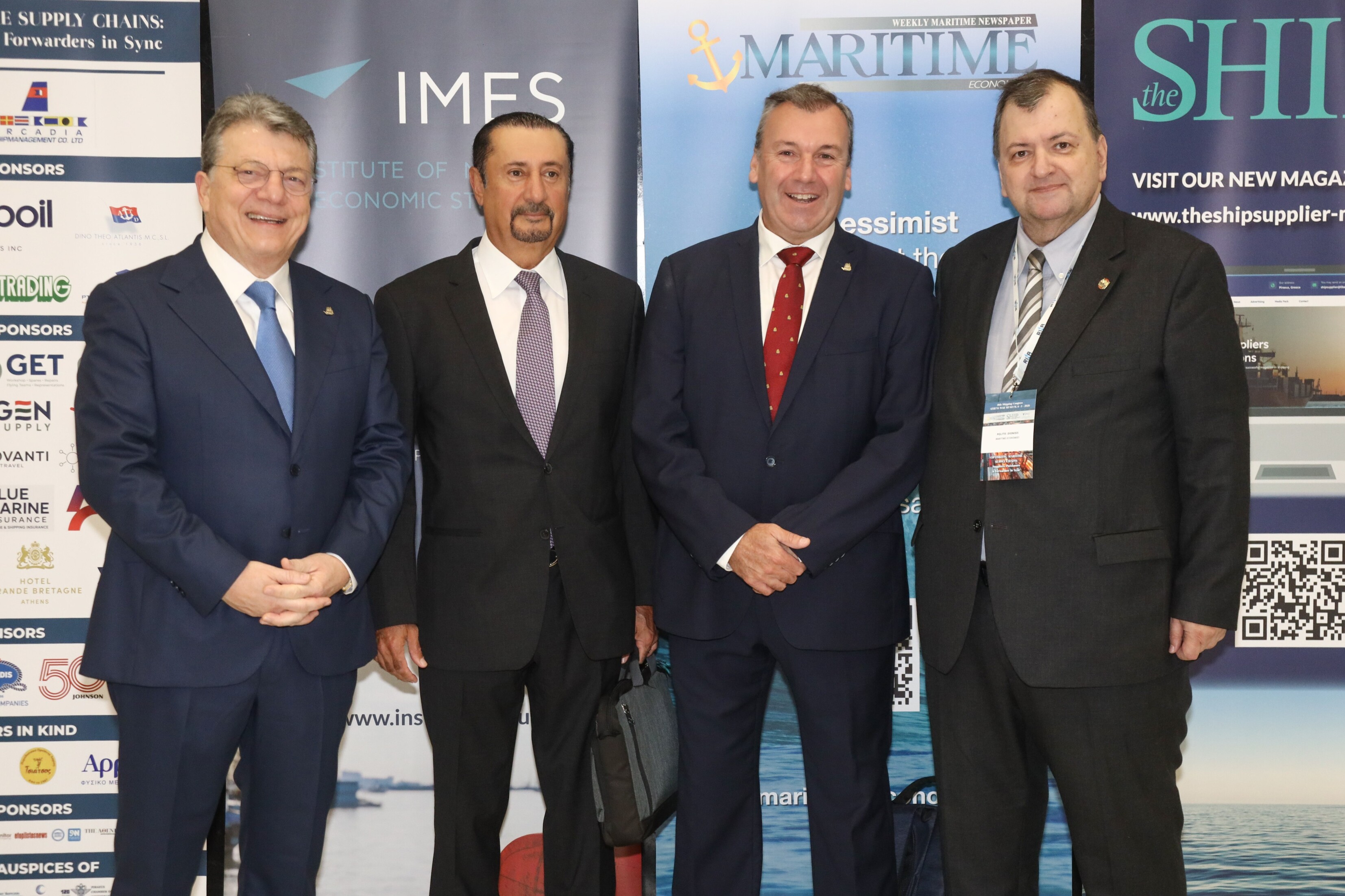
The 18th Shipping Conference, co-organized by the maritime newspaper Maritime Economies and Institute of Maritime & Economic Strategy was concluded with outstanding success under the central theme:
“Optimizing Maritime Supply Chains: Suppliers, Purchasers & Forwarders in Sync.”
Held in Athens, the conference attracted strong interest from the Greek and international maritime community, confirming the growing importance of supply chain alignment at a time of heightened operational, regulatory, and geopolitical challenges.
The level of participation alone underscored the success of the event. A total of 620 delegates attended the conference, representing shipping companies, suppliers, freight forwarders, bunkering firms, technology providers, and institutional stakeholders. The program featured 31 distinguished speakers, all senior professionals and industry experts, while the event was supported by 34 sponsors and partners, whose contribution was instrumental in delivering a high-quality conference.
The conference delivered a clear and consistent message: efficiency and resilience in maritime supply chains can no longer be addressed in isolation. Suppliers, purchasers, and forwarders must operate in close coordination, supported by shared strategies, transparency, and technology-driven processes. In an environment shaped by geopolitical uncertainty, increasingly complex regulations, and the industry’s transition toward greener operations, such synchronization is no longer optional—it is essential.
Particular emphasis was placed on the opening keynote address, which highlighted the need for modern shipping to strike a balance between operational efficiency, safety, and environmental responsibility. Supply chains are no longer defined solely by timely delivery and cost control, but also by traceability, compliance, and measurable reductions in environmental footprint.
Across the thematic sessions, speakers addressed key challenges facing the maritime industry today. One of the central discussion points was the need to establish common performance indicators (KPIs) across all supply chain stakeholders. Metrics such as delivery lead times, reliability of supply, total cost to serve, and CO₂ emissions per transaction were identified as critical tools for improving collaboration, accountability, and overall performance.
The sessions focusing on ship purchasing best practices were particularly well received. Through real-world case studies, speakers demonstrated how data analytics and digital procurement tools can significantly enhance cost management and supplier performance. It was widely acknowledged that shipping companies investing in spend analytics, long-term procurement frameworks, and strategic supplier partnerships are better positioned to withstand market volatility and supply disruptions.
Innovation in onboard logistics was another focal point of the conference. Presentations covered automated inventory management systems, digital tools for optimizing shipboard supply flows, and advanced cold-chain solutions for sensitive provisions. Pilot implementations presented during the conference showed tangible benefits, including reduced stock shortages, improved service quality for crews, and lower operational costs.
The future role of bunkering within the broader supply chain ecosystem was also examined in depth. Discussions extended beyond conventional fuels to include LNG, biofuels, ammonia, and hydrogen. Speakers emphasized that bunkering is rapidly evolving from a standalone operational activity into a strategic component of integrated maritime supply chains, with direct implications for cost efficiency, emissions compliance, and long-term fleet strategy. The importance of aligning fuel procurement with other ship supply operations was repeatedly highlighted.
A recurring theme throughout the conference was the human factor. Despite rapid technological advancement, speakers agreed that people remain central to successful transformation. Continuous training of shore-based procurement teams and onboard crews was identified as critical to ensuring effective adoption of new systems, regulatory frameworks, and operational processes.
Overall, the 18th Shipping Conference organized by Maritime Economies and IMES Inc clearly demonstrated that the future of shipping depends on collaboration, transparency, and innovation. In an era of growing uncertainty, aligning suppliers, purchasers, and forwarders is not merely a strategic advantage—it is a necessity. The strong engagement of participants and the high quality of discussions confirmed that initiatives of this nature play a vital role in building a more resilient and sustainable maritime ecosystem.
The organizers expressed their sincere appreciation to all speakers, sponsors, and—most importantly—the 620 delegates who actively contributed to the success of the conference through their participation and dialogue. The next edition is eagerly anticipated, with the shared objective of continuing knowledge exchange and delivering practical, forward-looking solutions to the evolving challenges of the global shipping industry.