

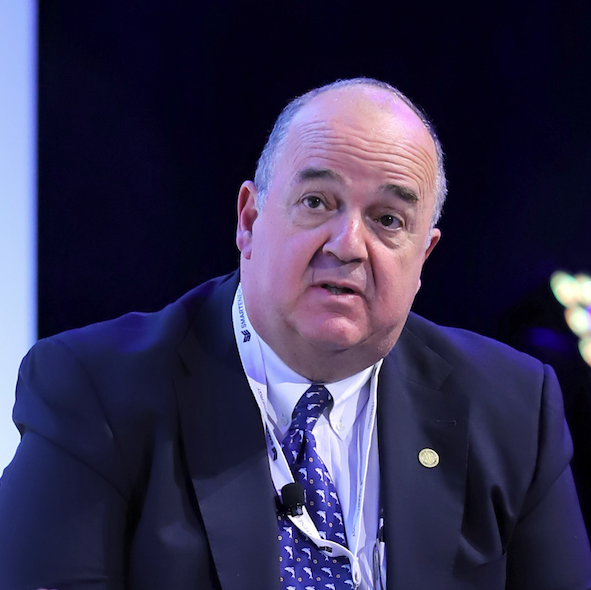
An interview with Professor Jorge Antunes, Founder & CEO, TecnoVeritas · Mafra, Portugal
Thirty years ago, a young Portuguese naval engineer sat down with a blank sheet of paper and a conviction that the maritime industry deserved better science. Today, that engineer — Professor Jorge Antunes — leads a company whose technology is changing the way vessels around the world burn fuel. TecnoVeritas, headquartered in Mafra, Portugal, has grown from a specialist engineering consultancy into the firm in the European Union to have played a major role in the national maritime decarbonisation programme. With technologies like SCR and BioHFO now deployed across all types of vessels and a partnership with Greek firm Oriani bringing the technology to one of the world’s most important fleets ahead of Posidonia 2026, we sat down with Prof. Antunes to understand where it all began — and where it is going.
Professor Antunes, TecnoVeritas was founded in 1994. What was the problem you set out to solve?
The maritime industry has always been full of brilliant engineers, but in the early 1990s, there was a gap between the knowledge that existed in academia and what was actually being applied on vessels at sea. We started TecnoVeritas — the name means ‘technical truth’ — with a very simple mission: to bring rigorous engineering science to the problems that operators face every day. Fuel consumption, emissions, and performance degradation — these were problems that were being managed rather than solved. We wanted to solve them.
In those early years, the work was broad. We did energy audits, emissions testing, and performance analysis across many industries. We built a fuel and oils laboratory that became accredited to ISO 17025, which gives us independence and credibility that is rare in this sector. And over time, the maritime industry became the centre of what we do, because that is where the engineering challenges are most demanding, and the stakes are highest.
How did the company evolve from a consultancy into a technology company?
It happened because our clients kept telling us: ‘We understand the problem now. Can you build us the solution?’ The first breakthrough was Enermulsion, a fuel emulsification technology that won us the Seatrade Clean Shipping Award in 2012 and was shortlisted for the Motorship Awards. That taught us something important: the maritime industry will adopt innovation, but only when it is type-approved, operationally proven, and economically compelling. You cannot ask a chief engineer to trust unvalidated technology. The consequences of a fuel system failure at sea are too serious.
So we built our entire innovation process around that understanding. Every product we develop goes through a rigorous engineering validation process, through the classification societies, and through real sea trials before we offer it to clients. Today, we hold type approvals from Classification Societies across multiple products. That is not a small thing for a company of our size, based in Portugal. It represents thirty years of technical credibility built one vessel at a time.
“The maritime industry will adopt innovation — but only when it is type-approved, operationally proven, and economically compelling. You cannot ask a chief engineer to trust unvalidated technology.”— Prof. Jorge Antunes, Founder & CEO, TecnoVeritas
BioHFO is your flagship product today. How did it come about?
We had been watching the biofuel landscape for several years, and what we saw concerned us. The industry was beginning to experiment with biofuels, but without a proper understanding of the operational risks. Biofuels are not homogeneous products — they vary enormously in their combustion properties, their compatibility with mineral fuels, and their behaviour in conventional fuel systems. Pre-mixed biodiesel blends were being sold as simple drop-in solutions, but the reality is more complicated. Fixed-ratio blends burn identically regardless of engine load, which is operationally inefficient. And the compatibility risks of pre-mixing were causing real problems on vessels where they were not anticipated.
BioHFO was our response to that problem. The core innovation is the inline processing concept: instead of blending fuels in a tank before they reach the engine, we process them separately and bring them together just two to three seconds before the injection pumps. There is no pre-mixed blend. There is no compatibility risk. And because the system adjusts the B100 incorporation ratio dynamically in real-time, based on engine load and compliance targets, you are always burning the optimal fuel mix for your CII rating and ETS position. It is a fundamentally different approach, and it is why we hold a patent on it.
You were a key player in the Portugal’s national maritime decarbonisation programme. What did that experience teach you?
It was the most complex and the most rewarding project in our history. The Portuguese Government launched the Navegação Ecológica programme with a €50 million budget to decarbonise the existing merchant fleet, and TecnoVeritas was selected to lead the technical implementation. We worked with 13 vessels in the first call (8 have been completed and 5 are underway) across passenger, cargo and specialised vessels categories, deploying BioHFO, our BOEM fleet performance management platform, variable frequency drives, shaft power meters, SCR systems for NOx abatement, and several other technologies tailored to each vessel’s specific profile.
The results were remarkable. On average, CII ratings improved by 42%. Conventional fuel consumption fell by 32%. Particulate matter fell by 23%, NOx by 36%, and SOx by 27%. Across the programme, we are now avoiding 77,518 tonnes of CO₂ every year. But what the programme also taught us is that decarbonisation is not a one-size-fits-all matter. Every vessel is unique. Even twin vessels, nominally identical, have different operational profiles that demand customised solutions. That insight is now built into everything we do.
Why Greece? And why now?
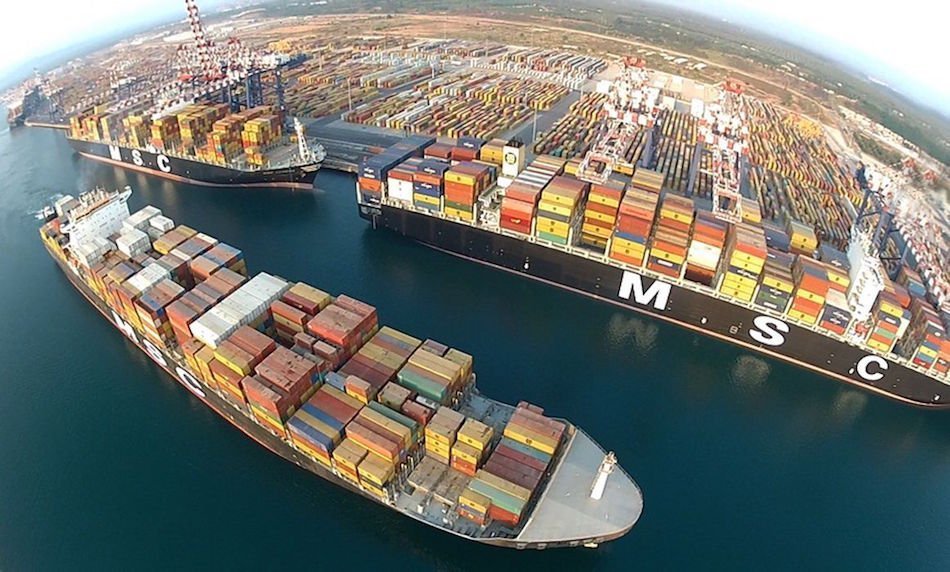
Greece operates approximately 900 EU-flagged vessels — the largest EU fleet in the world. These are not prospects. They are vessels that are already trading on EU routes, already exposed to the EU Emissions Trading System, and already subject to FuelEU Maritime requirements. The economics of BioHFO are most compelling precisely for this fleet profile: vessels with predictable routes, significant fuel consumption, and years of remaining economic life that make an investment with a two-year payback period not a risk but a rational decision.
We have formalised a partnership with Oriani, a highly respected Greek firm with deep relationships across the Greek shipping community, to represent TecnoVeritas in Greece. Oriani understands this market at a level of granularity that we could not replicate alone. Together, we will be presenting BioHFO at Posidonia 2026 — the most important maritime exhibition in the world, held in the city that is the heartbeat of global shipping. It is exactly the right moment and exactly the right place.
There is also a broader ambition. Portugal’s national programme demonstrated that when a flag state commits to decarbonisation with proven technology and proper funding, the results are transformative. Greece has the fleet size, the regulatory pressure, and the political motivation to replicate that programme. One flag state deal can unlock contracts for 10, 20, or 50 vessels simultaneously. That is the scale at which the industry needs to move if it is serious about its 2050 targets.
What is your vision for TecnoVeritas in five years?
We are 31 years old, we have 350 clients in more than 20 countries, and we are currently running four international R&D projects. But I believe we are still at the beginning of our most important chapter. The combination of geopolitical instability driving fossil fuel prices to record levels, regulatory pressure through FuelEU Maritime and the EU ETS, and the narrowing cost gap between biofuels and conventional fuels means that the market conditions for BioHFO have never been better.
My vision is to see our fuel and energy efficiency, and emissions abatement technologies operating on hundreds of vessels across the EU and beyond, with national programmes in multiple flag states following the Portuguese model. I want to see TecnoVeritas recognised not just as a Portuguese engineering company, but as the global reference for inline biofuel processing technology. And I want to do it the way we have always done it: with rigorous science, with proper certification, and with results that speak for themselves.
We have a saying in our company: ‘Your problem is always an opportunity to do our best.’ That has not changed since 1994. It is still how we approach every client, every vessel, every engineering challenge. It is what makes us TecnoVeritas.
|
TECNOVERITAS AT A GLANCE Founded: 1994, Mafra, Portugal Sectors: Maritime & Industrial — Decarbonisation, Energy Efficiency, R&D, Verification Clients: 350+ in 20+ countries across all continents Certifications: ISO 9001:2015, ISO 17025 (fuel & oils lab), ISO 14065 (MRV & FuelEU verifier), R&D Recognised Entity (Portuguese State) BioHFO Type Approval: DNV, Bureau Veritas Awards: Seatrade Clean Shipping First Prize 2012 (VEEO), Green Project Awards Honourable Mention 2013 (Enermulsion), Motorship Awards Finalist, Motorship Propulsion Awards Shortlisted 2025 (BioHFO) Flagship products: BioHFO (inline B100 processing), BOEM (fleet performance platform), SCR (NOx retrofit), OptiPower (shaft performance), VFD systems Greek market: Represented by Oriani. Participating in Posidonia 2026. |