
Periods of armed conflict and geopolitical disruption inevitably prompt questions about whether charterparties can be brought to an end under the English law doctrine of frustration. With continuing disruption, heightened security risk and delay affecting shipping in the Persian Gulf and Strait of Hormuz, shipowners and charterers may be considering whether current fixtures have been, or may yet become, frustrated by delay.
Under English law, frustration remains an exceptional remedy. The bar is deliberately high, and the doctrine is not engaged lightly. This article considers frustration by delay under English law, with a particular focus on the importance of timing, the role of war risk clauses in the current Strait of Hormuz context, and practical points for Members.
Frustration by delay under English law
A contract is frustrated only where a supervening event, occurring without fault and outside the parties’ contractual allocation of risk, renders further performance impossible, or transforms it into something radically different from that originally contemplated. It arises automatically and does not have to be invoked by either party at the relevant time.
The courts have accepted that war can, in certain circumstances, amount to a frustrating event – most obviously where performance becomes illegal due to supervening illegality. But generally what matters is the impact of any war on performance of the contract.
Delay can in principle frustrate a charterparty, but only where it is sufficiently prolonged or appears indefinite, so that the commercial venture can no longer sensibly be performed. Increased cost, uncertainty, inconvenience, or even serious disruption will not usually suffice.
Crucially:
- The assessment is made at the time the delay affects performance, not with hindsight.
- The question is whether, viewed objectively at that time, performance appears to be prevented for an indeterminate or commercially unacceptable period.
- Shorter or finite delays – even if severe – will rarely meet the threshold. For example, in The Sea Angel case, the Court of Appeal decided that a delay of three months towards the end of a 20-day charterparty did not frustrate the charterparty.
English courts repeatedly stress that frustration is not a mechanism for reallocating hardship where the contract has simply become disadvantageous to one party.
It should also be remembered that frustration cannot be relied on if the event preventing performance was caused by a party’s breach of charter: so-called self-induced frustration. This may apply, for example, where a charterer has breached a safe port warranty by ordering the vessel to an unsafe port. In such cases, a supervening event affecting that port may not give rise to frustration if there is a connection between the event and the unsafety of the port.
Timing matters: when could frustration arise?
In delay cases, frustration (if it occurs at all) generally arises only once performance has effectively reached a standstill and there is no realistic route to performance other than in a manner or timeframe radically different from that originally contemplated.
This has important consequences in the present context. For example, where cargo operations are continuing, or where redelivery or onward performance remains possible, frustration may be difficult to establish.
War risk clauses and contractual risk allocation
A central theme in English law frustration cases is that the analysis starts with the contract.
Where the parties have made detailed provision for war risks, delay, detention, off‑hire, alternative routing, insurance and additional costs, this will often indicate that the relevant risks were contemplated and allocated, even if imperfectly.
In such circumstances:
- Frustration arguments frequently fail because the event relied upon is already addressed – expressly or by implication – by the contract.
- The fact that a clause does not deal exhaustively with every consequence of war or delay does not, by itself, open the door to frustration.
- Silence in the contract may simply mean that the risk “lies where it falls”.
This is particularly important for time charters and trip time charters, where English law is slow to disturb the agreed allocation of risk relating to delay. However, as always, the contract terms are crucial and for example a trip time charter that contains a specific route or port pairing, or a maximum duration, may be more easily frustrated than a long-term period time charter with worldwide trading.
The current Hormuz position: legal risk assessment
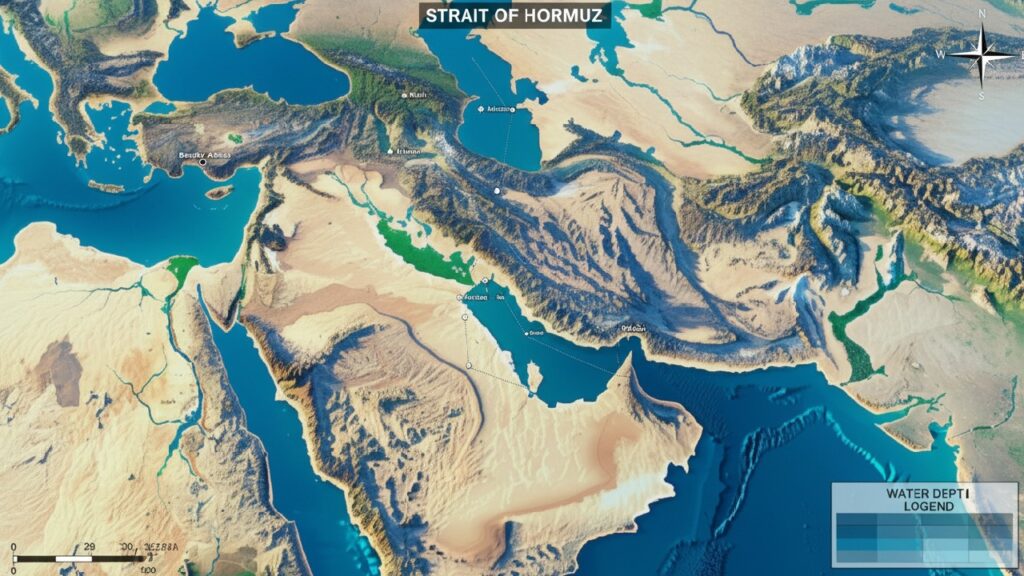
Turning to the present situation in and around the Persian Gulf and Strait of Hormuz, there is no doubt that conditions there remain volatile and highly unpredictable.
However, from an English law frustration perspective:
- Much depends on duration and outlook, not merely severity.
- Ongoing uncertainty, even acute uncertainty, does not equate to impossibility.
- The fact that transit through the Strait is limited, delayed or subject to special procedures is unlikely, without more, to constitute frustration.
In practice, tribunals and courts are generally slow to conclude that contracts have been frustrated by geopolitical events where the situation remains fluid and capable of change – even if that change ultimately takes many months.
Practical FD&D guidance
Members considering frustration arguments in the current environment should proceed with caution:
- Analyse charterparty terms in full including trading limits, safe port warranties, war risk, redelivery, off‑hire and deviation provisions.
- Treat frustration as a last resort, not a primary option to terminate a contract.
- Be mindful that premature assertions of frustration may themselves amount to anticipatory repudiatory breach, potentially giving rise to damages for failure to perform.
- Preserve evidence on the nature, cause and expected duration of delay, assessed at the relevant time. It can be particularly helpful to build a picture of developments and changes in the situation on a day-by-day basis.
- While frustration arises automatically and hindsight should not be applied; in practical terms it may be possible to see a deteriorating trajectory and determine that the outlook for performance of the fixture has shifted at or around a particular time. For example, one event in a series may be enough to tip the balance in favour of the estimated delay changing from weeks to months (or more).
- Consider the impact of frustration. Parties are discharged from performing future obligations but the position in relation to payments in respect of services already provided may not be straightforward, in particular under the Law Reform (Frustrated Contracts) Act 1943, which applies to time charterparties. It does not, however, apply to other charterparties, such as voyage charterparties, or to any contract for the carriage of goods by sea. Under voyage charterparties which have been part-performed, a key question will be whether freight has been earned.
Source: NorthStandard by Craig Blackwood, FD&D Claims Director – Mediterranean & Ireland / Nordics & Northern Europe