



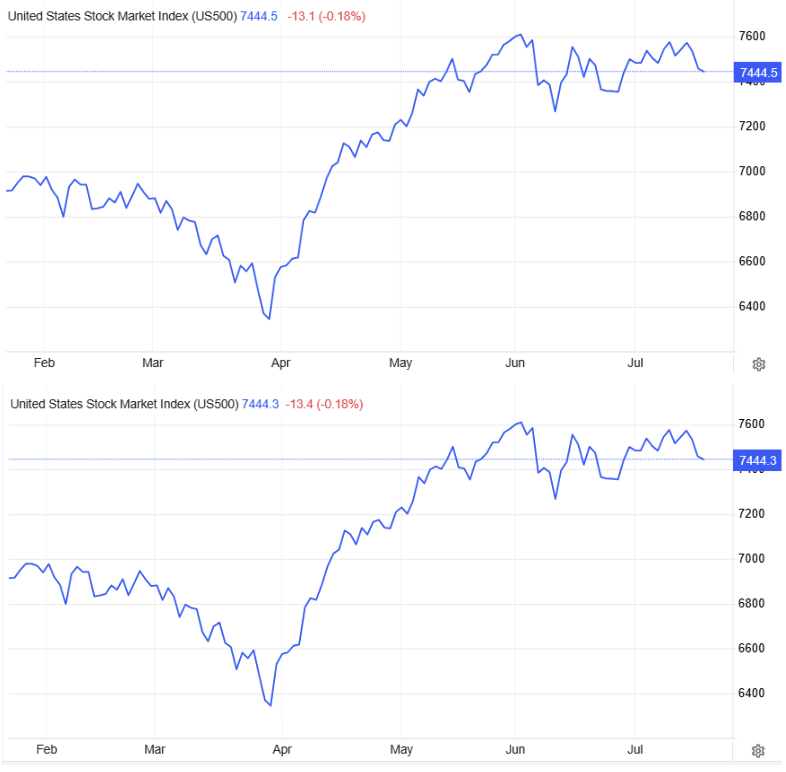
The progression of July 2026 offers the investment community one of the most interesting and instructive macroeconomic backdrops of recent years. While a superficial reading of the indices shows US markets moving with marginally negative returns for the month so far, a deeper analysis of the data reveals a completely different picture. The market is laying the groundwork for a potential reversal into positive territory over the coming days. If achieved, this will seal the third consecutive profitable month for Wall Street, confirming the structural resilience of the US economy.
This positive dynamic is not based on wishful thinking, but on the solid confirmation of macroeconomic data released last week in the US. The noticeable retreat of inflation (CPI) to 3.5%, with the monthly index recording its largest drop in recent years due to the easing of energy costs, combined with retail sales being held at healthy levels and low jobless claims, fundamentally shifts the balance.
These data points definitively dismantle the alarmist scenarios of new interest rate hikes advocated by many analysts. On the contrary, they fully vindicate our steady assessment that the monetary tightening cycle has concluded and that the path for the first-rate cuts is now wide open. This outlook reignites investment appetite, providing substantial fuel to the real, cyclical economy.
This landscape is dramatically reinforced by the barrage of major central bank meetings scheduled for the coming days. The European Central Bank (ECB) takes the baton on July 23, with Christine Lagarde tasked with managing the Eurozone's economic slowdown, while the Federal Reserve follows on July 28–29, where Kevin Warsh will need to align monetary policy with cooling prices. Meanwhile, the Bank of Japan (BoJ) closes the cycle at the end of the month (July 30–31), shaping a new global framework of heightened liquidity that favors market risk-taking.
At the same time, the board is experiencing a necessary and perfectly healthy unwinding in the overheated high-tech sector. Recent pressure on semiconductor and AI stocks (with the SOX index correcting noticeably from its record highs) reflects institutional portfolios weighing the return rates on massive capital expenditures (Capex). Furthermore, the emergence of new competitive AI models from Asia, such as China's Moonshot AI, demonstrates that technological competition is broadening, stripping away the monopolistic premium from specific US giants.
This release of capital from the chip sector did not lead to liquidation, instead, it fueled a fierce rotation toward value sectors, industrials, and the insurance sector. The impressive outperformance of companies like Travelers (+9%) and Progressive proves that smart money is actively seeking stable cash flow and guaranteed returns in the real economy.
The main catalyst for finalizing July's trajectory lies in the current week, during which nearly 80 companies in the S&P 500 report Q2 earnings. The track record so far is remarkably encouraging, with over 80% of businesses managing to beat analysts' estimates on earnings and revenue, proving that corporate profitability remains extraordinarily resilient despite high borrowing costs.
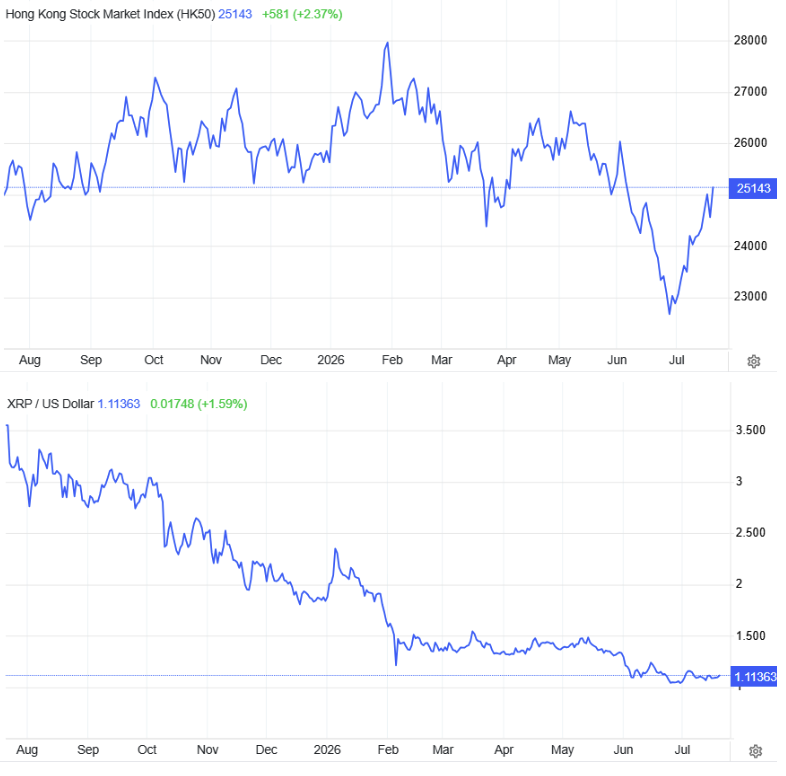
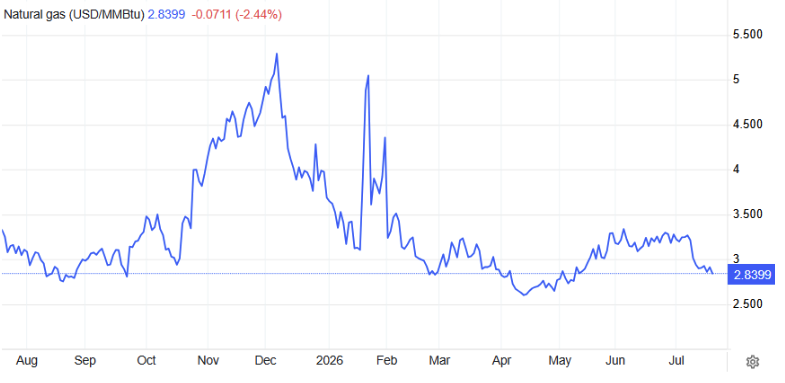
Beyond Western equities, our regional allocation calls are yielding clear results. Over our last three consecutive articles, we repeatedly highlighted technical charts of the FXI (iShares China Large-Cap ETF) when market consensus was overwhelmed by pessimism with the index lagging around -17%. Today, as FXI has aggressively rebounded toward the -9% mark, our insistence on recognizing deep tactical value in Chinese large caps stands fully validated. Simultaneously, Natural Gas prices have begun moving smoothly into our targeted favorable ranges, adding another layer of cost relief for industrial consumers and validating our broader energy market framework.
Despite these internal realignments and surface-level fluctuations, the most striking element remains that total US stock market capitalization continues to hover steadily around the staggering $65 trillion mark. This confirms that there is no capital flight out of the US, but rather a continuous internal recycling of vast available liquidity.
Against this backdrop, our macroeconomic position remain entirely consistent and clear:
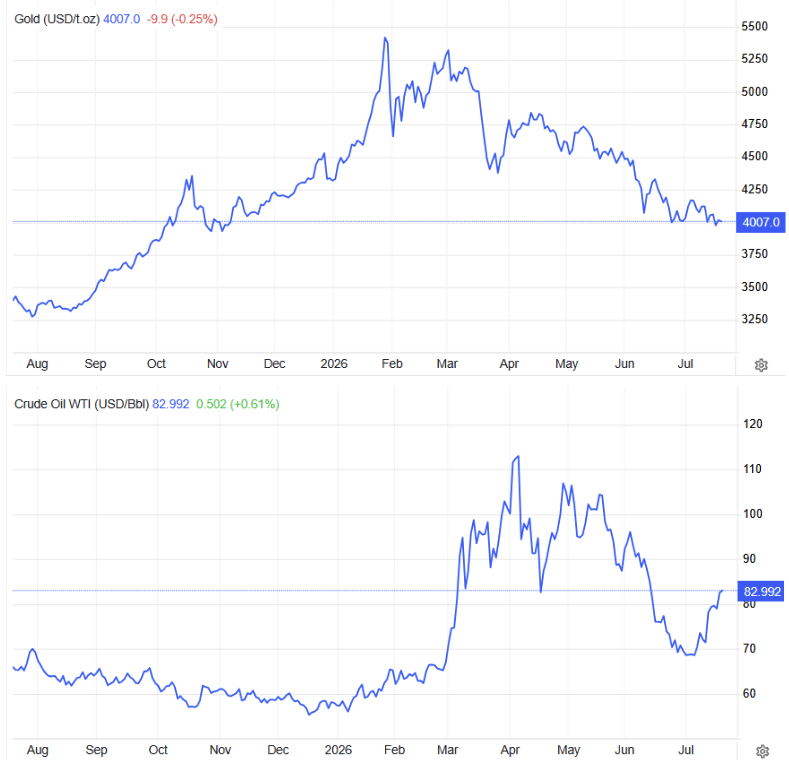
- Gold: We estimate that with the definitive removal of inflationary fears and the retreat of the CPI, the precious metal will lose its short-term luster as an anti-inflationary haven, moving correctly toward the $3,000 per ounce level.
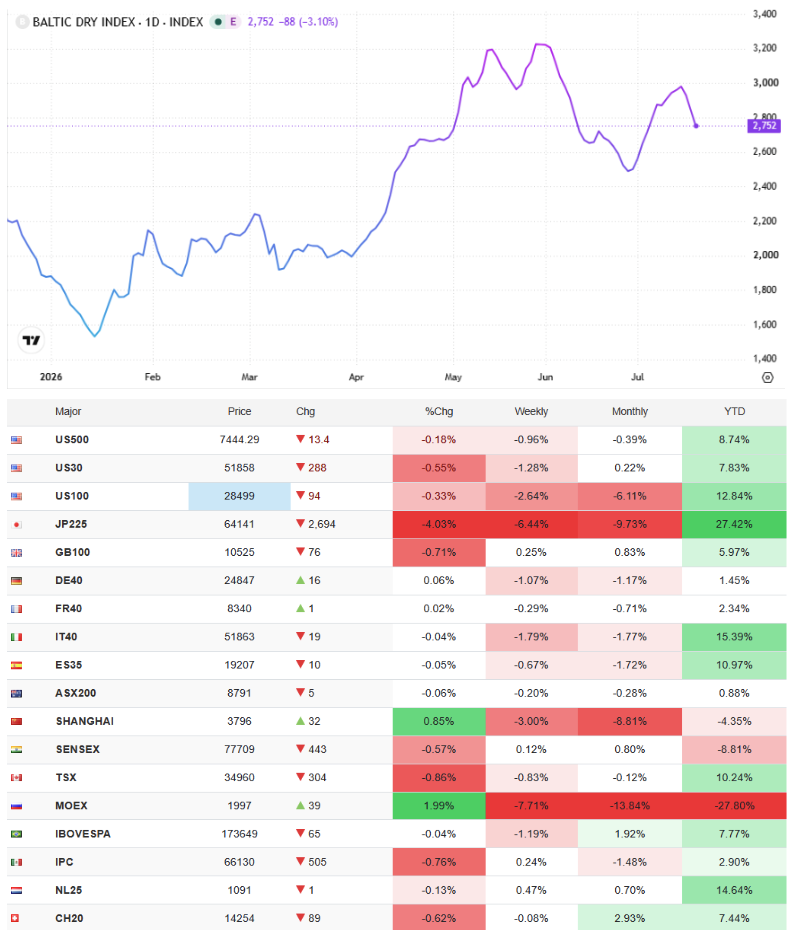
- Baltic Dry Index (BDI): We maintain with institutional rigor our position that the upward trajectory of the dry bulk index above 3,000 points is a certainty, as demand for commodities and tonne-miles remains robust.
- Oil & Natural Gas: We hold firm to our strategic forecast that crude prices will gradually slide over the summer and through the end of the year toward $65 per barrel, while Natural Gas continues to stabilize at highly favorable levels for industry and transport.
In an environment defined by rapid capital rotation, macro noise, and changing interest rate dynamics, the role of a dedicated professional investment advisor becomes indispensable. Navigating these shifts requires far more than passive index exposure; it demands disciplined foresight and active execution. Investors who aligned their portfolios with the strategic roadmap laid out across our publications, from capitalized rotations in value and dry bulk shipping to timely tactical entries in Chinese equities, unlocked substantial alpha and secured exceptional risk-adjusted returns.
Based on all the above, our strategic assessment is that we are witnessing the starting line of a particularly "hot" summer in terms of returns, characterized by low volatility levels and controlled fluctuations. The current week possesses all the ingredients to spark a powerful bullish momentum capable of maintaining its pace through late September. Maintaining composure, correctly reading these internal capital rotations, and partnering with expert advisory guidance remain your most vital compass for the period ahead.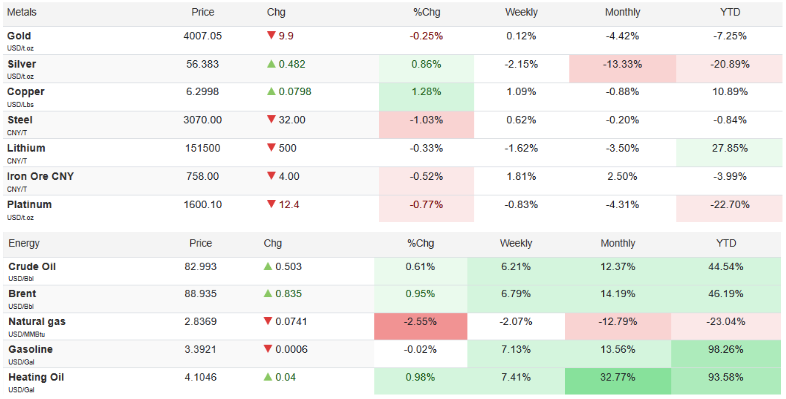
by George Kotsiakis