


By Dr. Evangelos Kyriazopoulos, General Secretary of Maritime Affairs & Ports
Globally, the maritime sector is being shaped by five interlinked pressures. First, geopolitical and security risk has returned to the center of shipping strategy: Russia’s war against Ukraine continues to affect Black Sea navigation and seafarer safety, while the 2026 military escalation around the Strait of Hormuz has shown how quickly a chokepoint disruption can transmit shocks into energy, freight, insurance and food markets. Second, although shipping and ports must invest in cleaner fuels and compliance systems to materialise environmental goals towards 2050, there is agrowing belief to proceed with pragmatic and not bureaucratic steps. Third, digitalisation and cyber-resilience are becoming core infrastructure requirements for vessels, ports and logistics chains. Fourth, industrial capacity and strategic autonomy matter more, especially for shipbuilding, repair, dual-use capabilities and critical port infrastructure. Fifth, the sector faces persistent financing, labour and skills constraints, at a time when global competition is intensifying.
The recently adopted EU Industrial Maritime Strategy and EU Ports Strategy are therefore highly consequential for Europe’s future competitiveness. The Industrial Maritime Strategy is designed to reinforce Europe’s maritime manufacturing and shipping base, strengthen industrial sovereignty, improve access to finance, accelerate digital and circular transformation, and support technological leadership in shipbuilding, equipment, repair and shipping services. In parallel, the Ports Strategy aims to upgrade ports as strategic industrial and logistics hubs by focusing on competitiveness, digitalisation, security, energy transition and better investment coordination, including investment in strategic port infrastructure. In practical terms, these strategies should help Europe move from a fragmented regulatory posture to a more integrated industrial-maritime policy.
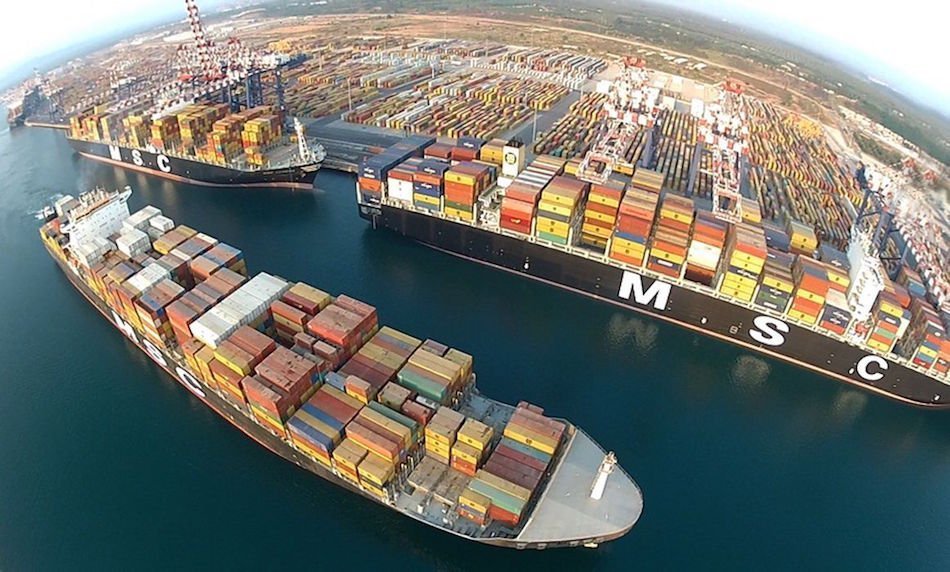
If implemented effectively, the EU strategies could improve Europe’s position in three ways. They can reduce strategic dependencies; accelerate the green and digital transition in a way that supports rather than erodes competitiveness; and strengthen resilience against coercion, supply-chain disruption and unfair competition. This matters because EU ports handle around 74% of the Union’s external trade, while ports are also critical for energy, defence mobility and territorial cohesion.
The main challenge is that policy ambition is colliding with a harsher geopolitical environment. The war against Ukraine continues to keep the Black Sea under security stress, with the IMO having formally highlighted the invasion’s impact on international shipping, seafarers and supply chains. At the same time, the recent escalation in the Gulf has underlined the fragility of Hormuz, through which roughly a quarter of global seaborne oil trade passes; UNCTAD has warned that disruptions there raise transport, bunker, insurance, fertilizer and food costs, with broader supply-chain consequences. Europe therefore faces a dual challenge: it must decarbonise and modernise, while also hardening its maritime system against conflict-related disruption.
For Greece, the implications are especially significant because our country sits at the intersection of shipping, energy corridors and East Mediterranean port competition. Greek shipping remains a global leader, accounting for about 20% of global deadweight capacity and roughly 61% of the EU fleet; We are particularly strong in bulk and tanker markets. This means our country is highly exposed to both the risks and opportunities created by geopolitical volatility. As an inference from the fleet profile and the current chokepoint disruptions, periods of rerouting and tighter tanker markets may support demand in some shipping segments, but they also bring higher war-risk premiums, fuel costs, compliance burdens, crew-security concerns and operational uncertainty.
For our maritime and port sector, the strategic opportunity is clear and allow me to say repetitive: Greece can position itself as a principal EU gateway in the Eastern Mediterranean for energy, short-sea shipping, intermodal logistics and secure supply chains. The EU Ports Strategy is potentially beneficial for Greek ports because it supports capacity expansion, digitalisation, clean-energy infrastructure, faster permitting for strategic projects and stronger security governance. This could improve the competitive standing of Piraeus, Thessaloniki, Alexandroupoli and other ports, especially where connectivity to rail, energy networks and logistics zones is strengthened.
However, the risks are equally real. Greek ports remain exposed to wider regional instability, to shifts in Suez and Eastern Mediterranean traffic patterns, and to intensifying competition from non-EU hubs. Moreover, if Europe’s new strategies are not matched by faster execution, investment discipline and regulatory coherence, Greek operators may face the costs of transition without securing the full competitive dividend.
In conclusion, the global maritime sector is entering a period in which security, energy, industrial policy and competitiveness are inseparable. The EU’s new maritime and ports strategies are a serious and timely response. For Europe, their success will depend on implementation speed and investment scale. For Greece, the stakes are even higher: with its shipowning weight and geostrategic location, it can be one of the principal beneficiaries of a stronger European maritime policy, but only if it combines resilience, modernisation and strategic port development with diplomatic stability and credible security preparedness.
This year’s biennial edition of Posidonia, can play a catalytic role in aligning policy priorities with market realities at a moment of heightened geopolitical and regulatory uncertainty.
First, it serves as a neutral convening platform where shipowners, ports, regulators, financiers and technology providers can translate high-level EU strategies into operational pathways. By bringing together stakeholders affected by decarbonisation mandates, security risks and supply-chain disruptions, Posidonia 2026will facilitate pragmatic dialogue on implementation timelines, financing gaps and regulatory coherence.
Second, it can shape political discourse by grounding it in industry evidence. Policymakers gain direct exposure to the cost implications of green transition measures, digital compliance and security requirements, which can support more proportionate and sequenced regulation. In parallel, it reinforces the need for European strategic autonomy in maritime capabilities.
Third, it informs business decision-making by reducing uncertainty. Market participants use the forum to assess investment signals in fuels, fleet renewal, port infrastructure and digital systems, while also gauging risk related to chokepoints and geopolitical tensions.
Finally, Posidonia enhances our role as a maritime hub, positioning it as a bridge between EU policy and global shipping practice. In this sense, the event contributes not only to dialogue, but to convergence between policy ambition and commercial feasibility.
Join us once more. It’s a win-win.