


When the international maritime community gathers in Hamburg for SMM 2026, it will do so at a defining moment for global shipping.
Few industries are currently experiencing such profound transformation. Geopolitical tensions are reshaping trade routes, global supply chains are under pressure and strategic competition is increasingly influencing international commerce. At the same time, shipping remains what it has always been: the indispensable foundation of global trade.
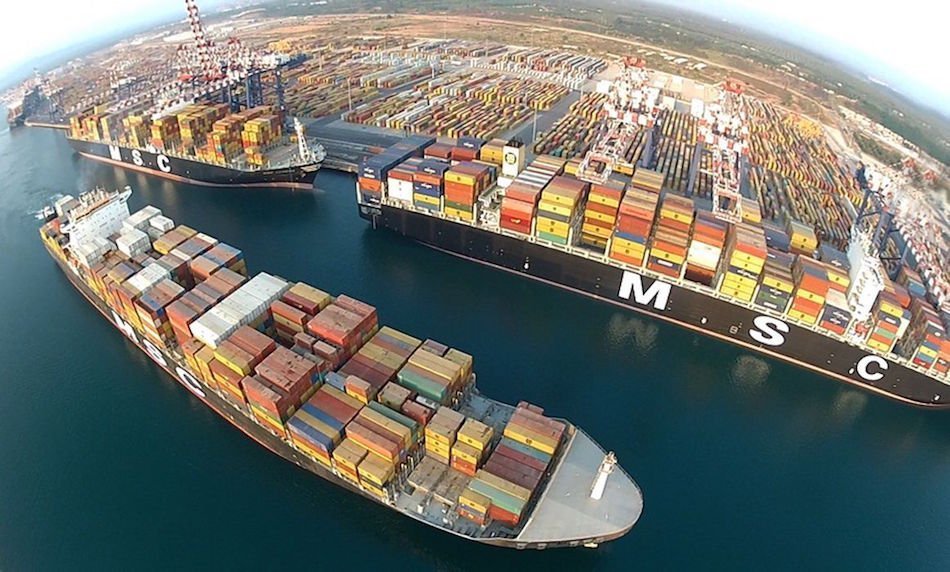
More than 90 percent of world trade is transported by sea. For Europe in particular, maritime transport is not simply one economic sector among many others. It is the infrastructure that secures industrial production, energy supply, exports and international connectivity. Without shipping, there is no functioning European economy.
Shipping is also a cornerstone of Europe’s security — from energy and food security to resilient supply chains and the reliable provision of essential goods for our societies. The European shipping fleet is one of the largest in the world, representing around 35 percent of the global fleet and enabling the EU to play a leading role in international supply chains. Shipping delivers the goods Europe needs, supports European exports and connects citizens within Europe and with the rest of the world.
This reality is especially important for Germany. As one of the world’s leading export-oriented economies, Germany depends on open sea routes and reliable maritime logistics.
German shipping companies continue to play a central role in global container and bulk shipping, while Hamburg remains one of Europe’s key maritime hubs and one of the continent’s most important gateways for international trade.
That is why SMM is far more than a trade fair. It is one of the world’s leading platforms for discussing the future of maritime transport and international trade. The event brings together shipowners, ports, technology providers, classification societies, policymakers and innovators from around the globe. Especially in times of geopolitical uncertainty, such dialogue is not optional. It is essential.
Recent years have demonstrated how vulnerable global supply chains and trade routes can become. The war in Ukraine, escalating tensions in the Persian Gulf, attacks on commercial vessels in the Red Sea and growing geopolitical fragmentation have fundamentally changed the perception of shipping.
Maritime transport is no longer viewed solely as an economic necessity. It is increasingly recognised as part of strategic resilience, security and geopolitical stability.
The role of shipping therefore extends far beyond commerce alone.
In times of crisis and conflict, merchant shipping becomes part of Europe’s strategic infrastructure.
Commercial vessels transport energy supplies, food, industrial goods and humanitarian aid. They also provide critical logistical capacity for military mobility, including the transport of equipment, vehicles and strategic materials.
Shipping capacity is not only an economic asset. It is also part of national and European resilience. For Europe, this creates an important responsibility. Maintaining a strong and internationally competitive maritime sector is not simply industrial policy. It is a strategic necessity.
At the same time, the economic pressure on shipping companies continues to increase. Global competition remains intense, while regulatory complexity, rising operational costs and geopolitical instability create additional burdens for European operators.
Shipping is one of the most international industries in the world.
Investments, operations and management structures are highly mobile. If Europe wants to preserve its maritime strength, it must ensure internationally competitive framework conditions.
This includes reliable regulation, investment security, modern port infrastructure and access to innovation and financing.
Of course, the transformation toward lower-emission shipping remains an important long-term objective. The industry is investing heavily in new technologies, alternative fuels and efficiency improvements. But the transition must remain economically realistic and internationally coordinated.
The primary objective must be to strengthen Europe’s maritime capabilities rather than unintentionally weakening them through fragmented approaches.
At the same time, the maritime industry continues to demonstrate something that is becoming increasingly rare in global politics: international cooperation that functions in practice.
Shipping has always been a global industry built on openness, connectivity and partnership across borders. Even in times of geopolitical tension and growing political division, the maritime sector continues to operate internationally and pragmatically.
This is one of the great strengths of shipping. The industry understands that global trade and global stability depend on cooperation rather than isolation. In many ways, shipping demonstrates that international collaboration remains possible even in a fragmented world.
There is perhaps also a broader lesson in this for politics.
The maritime sector shows that openness is not weakness. Connectivity is not dependency.
And cooperation across borders is not a risk, but a prerequisite for stability, prosperity and resilience.
SMM itself reflects this spirit.
The exhibition has evolved into one of the world’s most important meeting points for maritime exchange and innovation. It showcases not only technological progress, but also the international character of the maritime community. Hamburg becomes a place where global cooperation is actively lived and strengthened.
People also remain at the centre of shipping.
The industry urgently requires highly qualified seafarers, engineers, IT specialists and maritime professionals. Attracting young talent to the sector therefore remains a key priority.
Shipping offers international careers, technological innovation and the opportunity to contribute directly to global connectivity and resilience.
Yet the industry must continue explaining its importance more clearly to younger generations.
Hamburg has always been a city shaped by openness, trade and maritime exchange. It is therefore a fitting location for discussions about the future of global shipping.
In the end, shipping is far more than transport: It secures supply, enables trade, strengthens resilience and connects the world. And in an increasingly fragmented geopolitical environment, this role has perhaps never been more important.
By Dr. Gaby Bornheim
President, German Shipowners’ Association (VDR)