
“Oil, Shipping and Wall Street Are Sending Signals Worth Decoding.”
The US midterm elections have come to an end, leaving behind a political outcome that contradicted the scenario we had outlined for a more balanced distribution of political power between the two chambers of Congress. As we have repeatedly pointed out, markets do not always follow the scenarios we develop, and acknowledging this reality is an integral part of a serious investment approach.
Nevertheless, we do not believe that the election outcome alone can halt the positive momentum that we expect President Donald Trump's economic and geopolitical strategy could generate during the final two years of his term. After all, the outcome of an election is one thing, while the actual ability to implement or reverse an economic strategy already underway is quite another.
Let us not forget that uncertainty is one of the most important factors influencing financial markets. And it is precisely this uncertainty that, in our view, the Democrats have continued to fuel through their statements and positions even after the electoral process was completed, raising further concerns about the direction of the US economy, investment activity and the future of some of its most important growth sectors.
The new Congress takes office on January 3, 2027. Until then, the existing political balance remains in place, while financial markets have a particularly interesting period ahead in which to reassess economic data, business prospects and the valuations that have emerged following the recent turmoil. We believe that the investment opportunities being created may ultimately prove more significant than the political noise dominating the headlines today.
And this is precisely where one of the most interesting aspects of the current period lies. Despite the intense volatility that followed the election results, the major US stock market indices have shown remarkable resilience, trading at the same levels as, or even above, those recorded before the results were announced. We also attach particular importance to the performance of the financial sector, which likewise appears to be holding above its pre-election levels.
This picture reinforces our view that the investment community is not limiting its attention to political confrontation but continues to seek opportunities, assessing valuations, earnings prospects and the real economic catalysts.
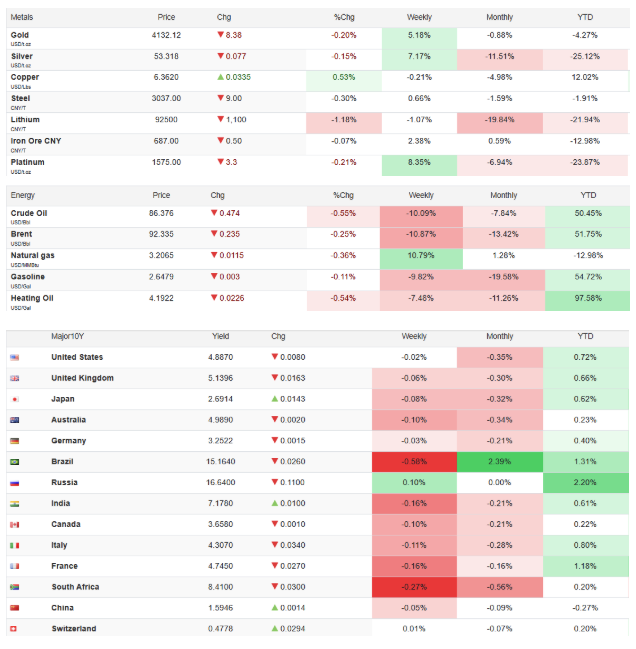
With total US stock market capitalization approaching $68.9 trillion, according to US Debt Clock data, and the yield on the 10-year US Treasury bond trading close to 4.88%, a fundamental question arises. Which of these indicators points to genuine weakness in the US economy? In our assessment, the behavior of financial markets does not, so far, suggest a broad-based deterioration. This does not mean that risks are absent, but rather that the numbers require us to distinguish political uncertainty from underlying economic momentum.
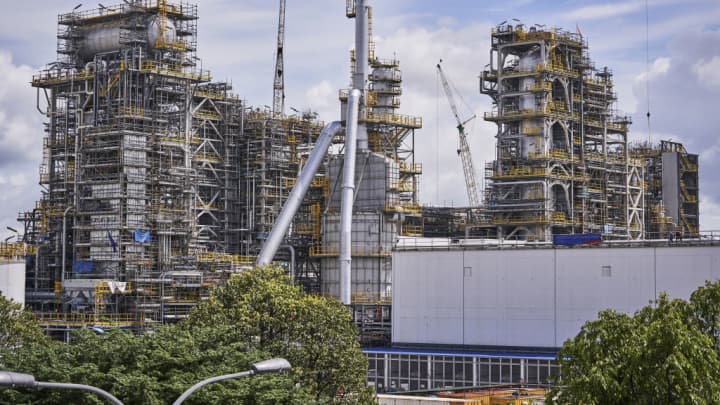
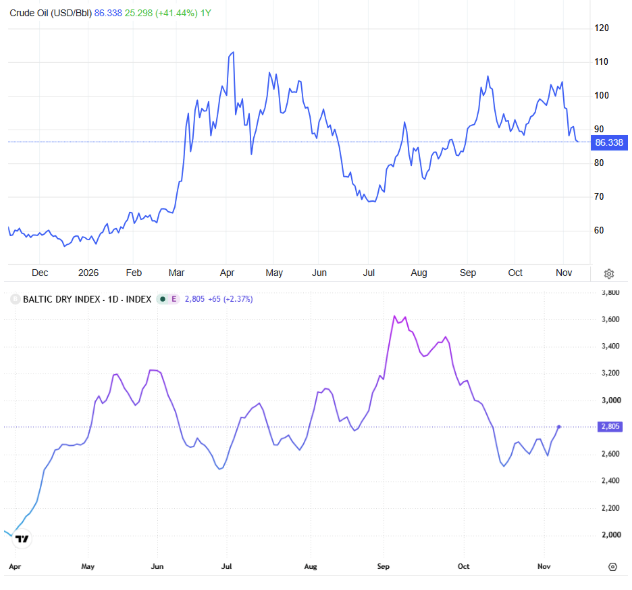
At the same time, the behavior of international oil prices is particularly noteworthy. Despite continuing geopolitical uncertainty and the daily statements surrounding the ongoing conflicts, we are witnessing a notable decline, with prices standing approximately eight dollars below their recent levels.
And here a question arises that we believe deserves particular attention. How can this decline be explained when geopolitical risks have not disappeared and US strategic petroleum reserves remain at low levels compared with previous decades? Could energy markets already be pricing in diplomatic developments that have yet to be reflected in official announcements? Or are changing expectations regarding supply and demand establishing a new equilibrium in the energy market?
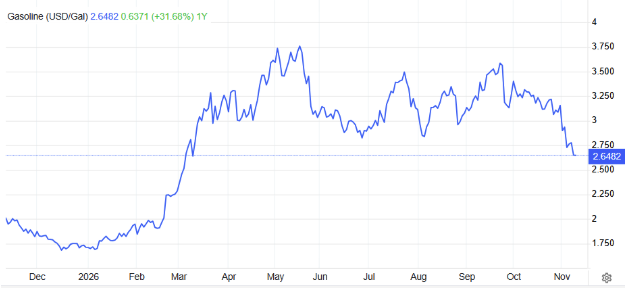
Another development we consider particularly encouraging is the behavior of gasoil prices. During previous corrections in crude oil prices, we had observed that gasoil did not follow the downward movement with the same intensity. This time, however, the picture appears different, as gasoil is following the decline in oil prices.
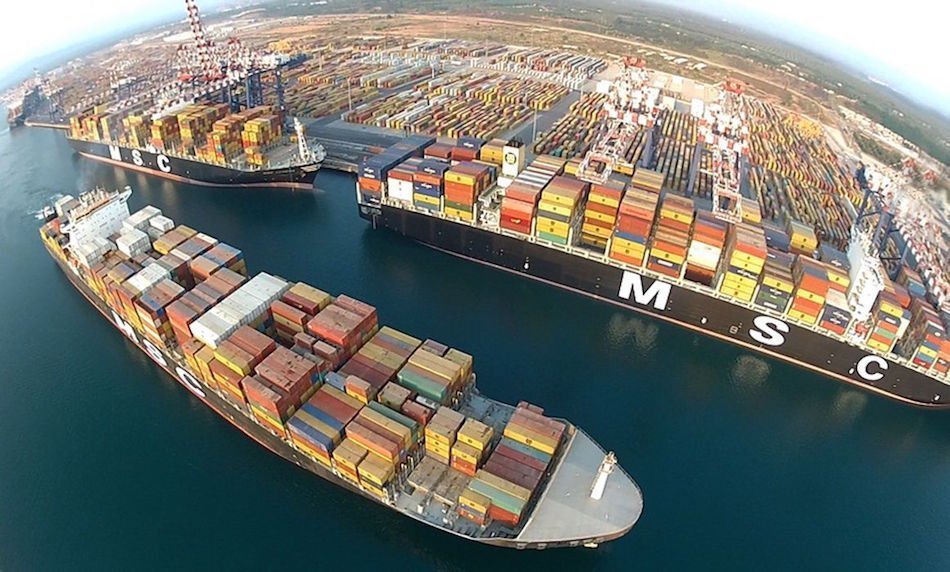
Of particular interest is the fact that the easing in marine fuel costs is currently being accompanied by downward pressure on freight rates. This is a development of considerable significance, as it is not limited to reducing vessels' operating expenses but also affects the cost of transporting goods by sea. Considering the decisive role of shipping in global trade, it becomes clear just how important this simultaneous decline could prove for supply chains, the final cost of products and, consequently, inflationary pressures.
However, we do not believe that this situation will necessarily be permanent. On the contrary, we estimate that, with the resolution of the geopolitical crisis involving Iran and the restoration of normal conditions along international trade routes, we could witness a particularly strong upward movement in freight rates, as a potential recovery in commercial activity and demand for maritime transportation would create new conditions in the freight market. This is a prospect we are monitoring with particular interest and one that reinforces our positive long-term outlook for the shipping sector.
We estimate that a downward break below the $1,200 level in gasoil could open the way for a further decline towards $1,000, while over the longer term we would not rule out a move towards $800. Should this scenario materialize, it could become another significant positive catalyst for the global economy, creating additional room for inflation to ease and more favorable conditions for monetary policy.
At the same time, we believe that the geopolitical landscape will play a decisive role over the coming months. Our assessment remains that President Trump will seek to accelerate diplomatic initiatives and agreements across the ongoing international conflicts, pursuing outcomes that could strengthen both the US economy and the political standing of himself and the Republican Party.
Indeed, we would not rule out the possibility that the final two years of his presidential term could generate significant positive catalysts for financial markets. And perhaps today's negative sentiment, which is largely fueled by political confrontation, may ultimately work in the opposite direction, provided that his economic and geopolitical strategy begins to deliver measurable results.
The elections are over. What we consider almost certain, however, is that neither of America's two major political parties is going to lay down its political arms. On the contrary, we expect the next two years to be characterized by intense political confrontation, and, in that respect, we are unlikely to find ourselves bored.
What requires particular attention is the return of sharp fluctuations in financial markets. History has shown us that periods of heightened volatility often accompany significant changes in economic and stock market trends, although volatility alone does not, of course, predetermine the direction markets will take.
For this reason, we consider the appropriate positioning of investment portfolios particularly important, considering volatility, risk tolerance and the investment opportunities that emerge. The return of volatility is not merely a risk factor; under the right conditions, it can also create significant opportunities for those with an investment strategy, discipline and a long-term approach.
Our assessment remains that we may not be far from the emergence of a significant upward move which, in line with seasonality and the historical statistical patterns we have repeatedly referred to, could continue through to the end of the year.
Financial markets do not wait for uncertainty to disappear before moving. On the contrary, they often price in future developments long before these become visible in the real economy.
And this is perhaps the most important reason why, despite the political upheaval and the return of volatility, we continue to view the current period not only as one of heightened risks but also as one of significant investment opportunities.
The elections are over. Political confrontations continue. The markets, however, are still looking ahead.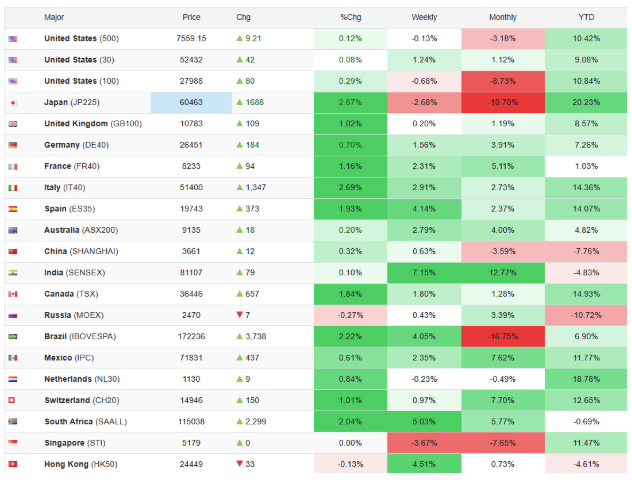
By George D. Kotsiakis
Founder - Private Wealth & Investment Strategist
GEKODESK & PARTNERS - Global Investment Services